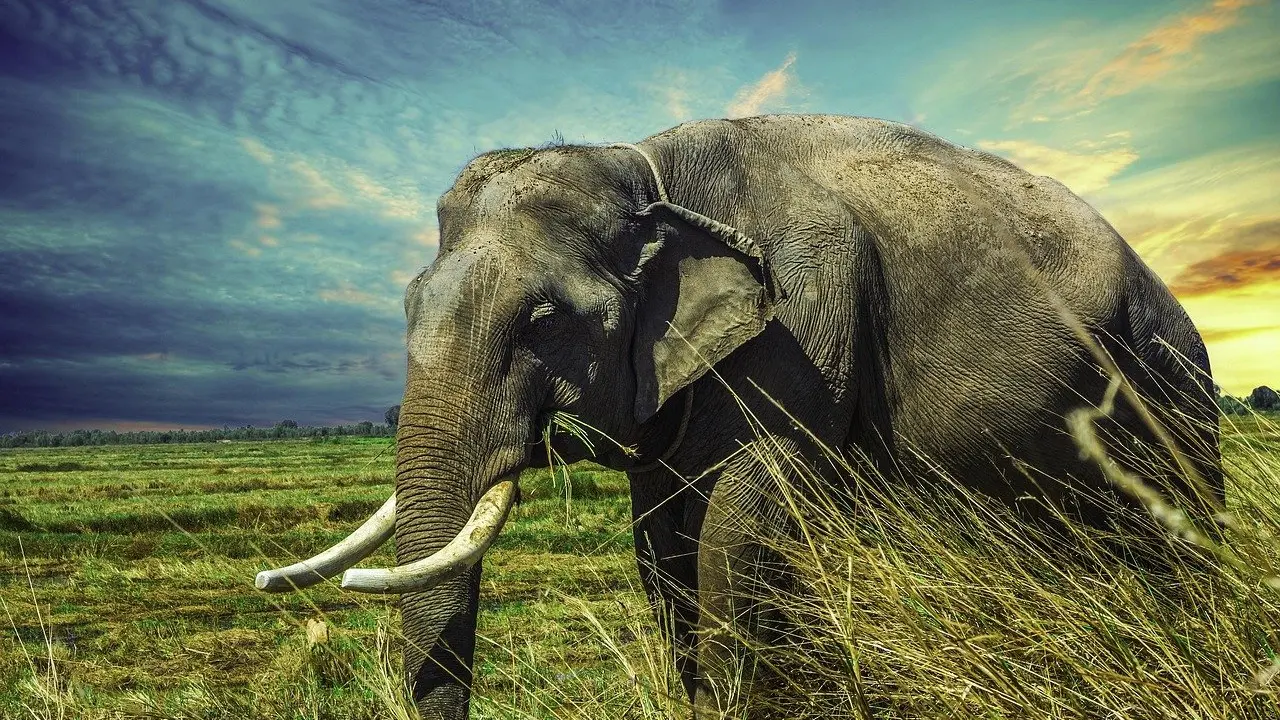
Why elephants rarely get cancer is largely a p53 story: elephants carry 20 copies of the TP53 gene, and their cells self-destruct more readily after DNA damage. The finding is a research lead, not a prevention method for people.
This explainer belongs to our wider natural health and cancer prevention research coverage. It sets out the mechanism step by step, then separates what is established in elephants from what people can actually use today.
Peto’s paradox: big bodies, few tumours
Peto’s paradox is the observation that, across animals, no clear correlation exists between size and length of life and proneness to cancer. Elephants are the standard example. They are huge and long-lived, yet they are not especially tumour-prone.
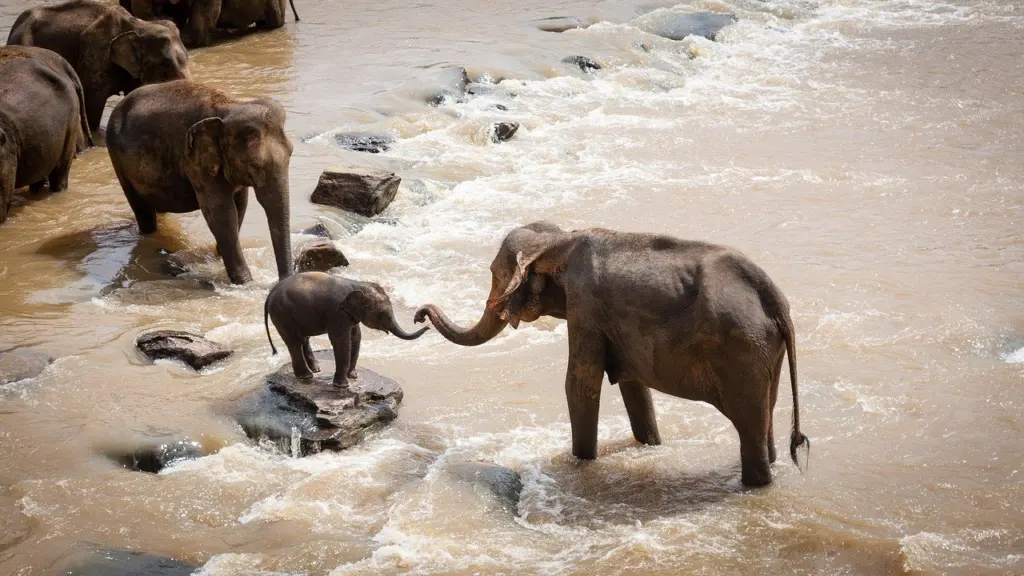
The scale of the body is what makes the pattern striking. According to the Genetic Literacy Project, elephants have 100 times as many cells as humans. Every cell division is a chance for DNA damage to slip through, so a body with that many cells should, on a naive view, be at greater risk.
Elephants are not the only case. The same source lists mole rats, gray squirrels, horses, whales and bats among animals that rarely get cancer. That matters for interpretation: the explanation is unlikely to be a single trick, and the elephant is one well-studied example of a wider pattern.
How rare is cancer in elephants?
Elephant cancer mortality is estimated at less than 5%, compared with up to 25% in humans. The figure is an estimate, so read it as a ballpark rather than a precise rate.
It comes from comparative work that, as IFLScience reports, went through 14 years of necropsy data to calculate tumour rates for 36 species of mammal. Using post-mortem records across many species is what lets researchers compare elephants with other animals rather than relying on a single anecdote.
The practical reading is that cancer in elephants is rare, not absent. The important question for biologists is then which cellular defences explain the gap, and the leading answer centres on one gene.
What the p53 protein does in cells
The p53 tumour suppressor protein is a damage-response manager. According to a Universitat Autònoma de Barcelona news release, p53 plays a key role in regulating the repair mechanisms of DNA and suppresses uncontrolled cell growth.
When damage is found, the same release explains, p53 is responsible for deciding whether cells should stop proliferating or go into apoptosis. Apoptosis is programmed cell death. It removes a damaged cell instead of letting it keep dividing, which is why p53 is central to any discussion of the TP53 gene’s function in cancer.
The sequence can be summarised as follows:
- Damage is detected. DNA in a cell is harmed.
- p53 responds. It supports DNA repair and holds back uncontrolled growth.
- A decision follows. The cell either stops proliferating or goes into apoptosis.
There is also a regulatory twist. The same release reports that elephant p53 isoforms do not get degraded or inactivated by MDM2, unlike in humans. In practice, that suggests elephant p53 may be harder to switch off, though the release does not describe this as a complete explanation by itself.
Extra TP53 copies in elephants
The headline genetic difference is gene count. Humans have a single TP53 gene, whereas elephants have an abnormally high number of copies. The comparison below puts the two side by side.
| Feature | Humans | Elephants | What it means |
|---|---|---|---|
| TP53 genes | 1 | 20 copies | Elephants have far more instances of the damage-response gene |
| TP53 alleles (versions) | 2 | 40 | Each gene contributes two alleles, so the elephant total is much larger |
Figures are drawn from the Tsavo Trust and the Universitat Autònoma de Barcelona.
The extra copies are mostly a different kind of gene from the original. IFLScience reports that 38 of the 40 alleles seemed to be modified duplicates of the original. These retrogene copies arose by duplication. Duplicated genes can end up as mutated or inactive copies of a normal gene that accumulate over eons of evolution, so a copy count alone does not tell you how much each copy contributes.
Cell experiments, LIF6 and other explanations
Cells that die more readily
Counting genes is only suggestive. The stronger evidence comes from cells. In the experiments described by IFLScience, elephant cells committed suicide twice as frequently as healthy human cells in response to DNA damage, and that response was found to be driven by p53.
That is a useful way to think about the mechanism. Rather than repairing and tolerating damaged cells, elephant cells appear to remove them more often, so fewer damaged cells are left to turn into tumours.
The LIF6 gene
A second finding involves LIF, a gene family with duplicated copies. As Fox 8 reports, one copy, LIF, seems to have reanimated and evolved a new on-off switch that responds to DNA damage. The point to take away is that an inactive duplicate can be revived and wired into the damage response. It shows how duplicated genes can become useful rather than remaining evolutionary leftovers.
Slower metabolism and fewer divisions
Gene-level explanations are not the only candidates. IFLScience notes that elephants’ sluggish metabolic rate is likely coupled with low rates of cell division. Fewer divisions would mean fewer opportunities for errors, so a slower metabolism may work alongside extra TP53 copies rather than compete with them.
What humans can learn from elephant cancer resistance
No elephant-inspired prevention method exists for people. The most that the research supports is a future direction: the Genetic Literacy Project notes that, eventually, it may be possible to use gene therapy, genetic engineering or pharmacology. That is a possibility, not a treatment on offer.
There is a good reason for caution. Reporting by Fox 8 notes that increasing p53 activity caused mice to age faster than normal. More tumour suppression is therefore not automatically beneficial, and the balance matters. A logical next research step the same report describes is inserting elephant genes into lab mice, which do not have the same resistance to cancer.
For readers looking for practical, evidence-based topics, the better starting points are food and supplement research. Our review of tart cherry cancer prevention studies and our guide to supplements that may help prevent cancer cover areas where people can actually look at the evidence. Elephant genetics, by contrast, is best read as an explanation of how tumour suppression works.
Frequently asked questions
Do elephants never get cancer?
No. Cancer mortality in elephants is estimated at less than 5%, which is low but not zero.
Does having more p53 always protect against cancer?
Not necessarily. In mice, increasing the gene’s activity caused them to age faster than normal, so how p53 is boosted and regulated matters as much as how much of it there is.
Are all the extra elephant TP53 copies working genes?
Most are modified duplicates. IFLScience reports that 38 of the 40 alleles seemed to be modified duplicates of the original, so the copy count alone does not show how active each copy is.
Is there a cancer treatment based on elephant genes?
Not yet. Gene therapy, genetic engineering or pharmacology based on these findings is described by the Genetic Literacy Project only as a possibility for the future.